
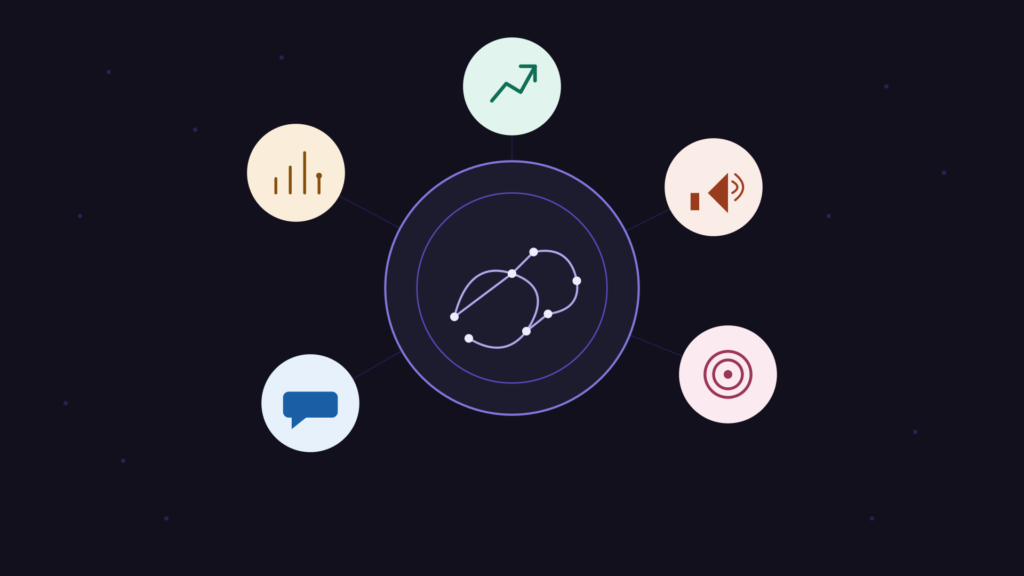
Think about the last time you searched for something online and found exactly what you needed — almost like the internet read your mind. Or maybe you received an email from a brand that felt like it was written just for you. Chances are, artificial intelligence (AI) was behind all of that.
AI in digital marketing is no longer a futuristic idea. It is already here, and in 2026, it is completely transforming the way businesses connect with their customers. Whether you are a small business owner, a blogger, or a marketing professional, understanding how AI is reshaping digital marketing can help you stay ahead of the competition.
In this blog, we will walk you through everything you need to know about AI and digital marketing in 2026 — in simple, easy-to-understand language.
What is AI in Digital Marketing?
Artificial intelligence (AI) means using computers and software to do tasks that normally require human thinking — like understanding language, recognising patterns, making decisions, and learning from data.
In digital marketing, AI helps brands understand their audience better, create content faster, run smarter ads, and deliver a more personalised experience to every customer — all at a scale that would be impossible for humans alone.
Simply put, AI is like having a super-smart assistant who works 24/7, never gets tired, and makes data-driven decisions instantly.
Why is AI So Important for Digital Marketing in 2026?
The digital world is moving faster than ever. Customers today expect instant responses, personalised content, and smooth online experiences. At the same time, businesses are dealing with more competition, more data, and tighter budgets.
This is where AI steps in. Here is why AI has become so essential for digital marketing in 2026:
• It processes large amounts of data in seconds
• It helps deliver the right message to the right person at the right time
• It reduces time and cost while improving results
• It continuously learns and improves on its own
Key Ways AI is Changing Digital Marketing in 2026
1. Personalised Customer Experience
One of the biggest changes AI has brought to digital marketing is personalisation. In the past, brands would send the same email or show the same ad to thousands of people. Today, AI makes it possible to personalise every single interaction.
For example, when you visit an online shopping website, AI analyses your browsing history, past purchases, and preferences to recommend products that you are actually likely to buy. This is called personalised marketing, and it is one of the most powerful applications of AI in digital marketing.
Companies using personalised marketing with AI see higher customer engagement, better conversion rates, and increased customer loyalty.
2. AI-Powered Content Creation
Content is still king in digital marketing — but creating great content consistently takes a lot of time and effort. AI-powered tools are now helping marketers create blog posts, social media captions, product descriptions, email newsletters, and even video scripts in a fraction of the time.
AI marketing tools like ChatGPT, Jasper, and Copy.ai use machine learning to understand your brand voice, target audience, and content goals — and then produce high-quality drafts that you can review and publish.
This does not mean AI is replacing human creativity. Instead, it is giving marketers a powerful assistant that handles the repetitive parts, so humans can focus on strategy and storytelling.
3. Smarter SEO with AI
Search Engine Optimisation (SEO) has always been a key part of digital marketing. But in 2026, AI SEO is taking things to a whole new level.
Search engines like Google now use AI to understand what users are really looking for — not just the exact words they type. This means that content needs to be genuinely helpful, well-written, and focused on answering real questions.
AI SEO tools like Surfer SEO, Clearscope, and Semrush now help marketers identify the best keywords, analyse competitor content, and optimise blog posts for better search rankings — all powered by machine learning marketing algorithms.
An exciting new trend in 2026 is Generative Engine Optimisation (GEO) — optimising your content to rank not just on Google, but also in AI-powered search engines like ChatGPT Search, Perplexity, and Google’s AI Overviews.
4. Chatbots and Conversational Marketing
Have you ever chatted with a customer support bot on a website and been surprised at how helpful it was? That is AI-powered chatbot marketing at work.
In 2026, AI chatbots have become incredibly sophisticated. They can answer complex questions, guide customers through the buying journey, handle complaints, and even upsell products — all in real time, without human involvement.
Chatbot marketing is especially valuable for small businesses because it allows them to provide 24/7 customer support without hiring a large team. Platforms like Intercom, Drift, and ManyChat use AI to power these smart conversations.
5. Predictive Analytics and Smarter Decisions
One of the most valuable things AI does in digital marketing is predict the future. Predictive analytics uses machine learning to analyse past customer behaviour and forecast what they are likely to do next.
For example, AI can predict which customers are likely to stop buying from you (called churn prediction), which products will be in demand next month, and what type of content will perform best with your audience.
This helps marketers make smarter, data-driven decisions — instead of guessing, they can act on real insights. Machine learning marketing tools like HubSpot, Salesforce Einstein, and Google Analytics 4 are already offering powerful predictive features.
6. AI-Driven Advertising
Running online ads used to be a complex and expensive process. You had to manually choose your audience, set budgets, write ad copy, and constantly tweak your campaigns. AI has completely changed this.
Today, platforms like Google Ads and Meta Ads use AI to automatically optimise your campaigns. AI analyses millions of signals — like a user’s age, location, browsing history, and interests — to show the right ad to the right person at the right time.
Marketing automation AI also helps with programmatic advertising — where ads are bought and placed automatically in real time, across thousands of websites and apps, with no manual effort needed.
7. Email Marketing with AI
Email marketing is one of the oldest digital marketing strategies, but AI has given it a powerful upgrade. AI tools can now personalise email content for each subscriber, optimise send times based on when each person is most likely to open, and even predict which subject lines will get the highest open rates.
Tools like Mailchimp and Klaviyo now offer AI-powered features that help marketers send smarter emails with better results — all while saving hours of manual work.
AI Marketing Tools You Should Know in 2026
Here are some popular AI marketing tools that businesses are using right now:
• ChatGPT / Claude — For content creation, brainstorming, and copywriting
• Jasper AI — For creating marketing copy and blog posts at scale
• Surfer SEO — For AI-powered SEO optimisation and keyword research
• HubSpot — For CRM, email marketing automation, and predictive analytics
• Canva AI — For creating stunning visuals and social media posts with AI
• Semrush — For competitive research, AI SEO audits, and content strategies
• ManyChat — For automated chatbot marketing on Instagram, Facebook, and WhatsApp
Will AI Replace Digital Marketers?
This is the question everyone is asking. The honest answer is: No — but only if you adapt.
AI is incredibly good at automating repetitive tasks, analysing data, and optimising campaigns. But it still lacks human qualities like creativity, empathy, cultural understanding, and the ability to build genuine relationships with customers.
The marketers who will thrive in 2026 and beyond are those who learn to work with AI — using it as a tool to amplify their skills, not compete against it. Think of AI as your smart marketing assistant, not your replacement.
The most in-demand digital marketing skills in 2026 combine human creativity with AI literacy — knowing how to use AI tools effectively while adding the human touch that machines cannot replicate.
Challenges of Using AI in Digital Marketing
While AI offers many exciting benefits, there are also some challenges to be aware of:
• Data Privacy Concerns — AI relies on large amounts of customer data, which raises privacy and security concerns. Businesses must follow data protection laws like GDPR.
• Lack of Human Touch — AI-generated content can sometimes feel robotic or generic. It needs human review and editing to sound authentic.
• High Learning Curve — Some AI marketing tools can be complex to learn and set up, especially for small businesses.
• Over-Reliance on Automation — Relying too heavily on AI without human oversight can lead to mistakes or tone-deaf marketing messages.
How to Get Started with AI in Your Digital Marketing Strategy
If you are new to AI marketing, here are some simple steps to get started:
• Start Small — Pick one area, like email marketing or content creation, and try an AI tool in that space first.
• Learn the Basics — Take free online courses on AI in digital marketing. Platforms like Google, HubSpot Academy, and Coursera offer great beginner resources.
• Experiment and Measure — Try AI tools, track your results, and see what works for your business.
• Stay Updated — AI is evolving rapidly. Follow marketing blogs, podcasts, and industry news to keep up with the latest trends.
Conclusion: The Future of Digital Marketing is AI-Powered
There is no doubt about it — AI in digital marketing is not just a trend. It is the new normal. In 2026, businesses that embrace AI marketing tools and strategies will have a massive advantage over those that do not.
From personalised customer experiences and smarter SEO to AI-powered chatbots and predictive analytics, artificial intelligence is making digital marketing faster, smarter, and more effective than ever before.
The key is to start learning, start experimenting, and start using AI in your marketing strategy today. The future belongs to marketers who combine human creativity with the power of artificial intelligence — and that future is already here.
Ready to level up your digital marketing game with AI? Start exploring the tools mentioned in this blog, and take your first step towards smarter, AI-powered marketing today.